From discussion to action: reflections from the Global Obesity Forum 2026
By Sadia Ali, Communications & Policy Lead, ASO
We know a great deal about what needs to change in obesity policy. So why is turning that knowledge into action still so difficult?
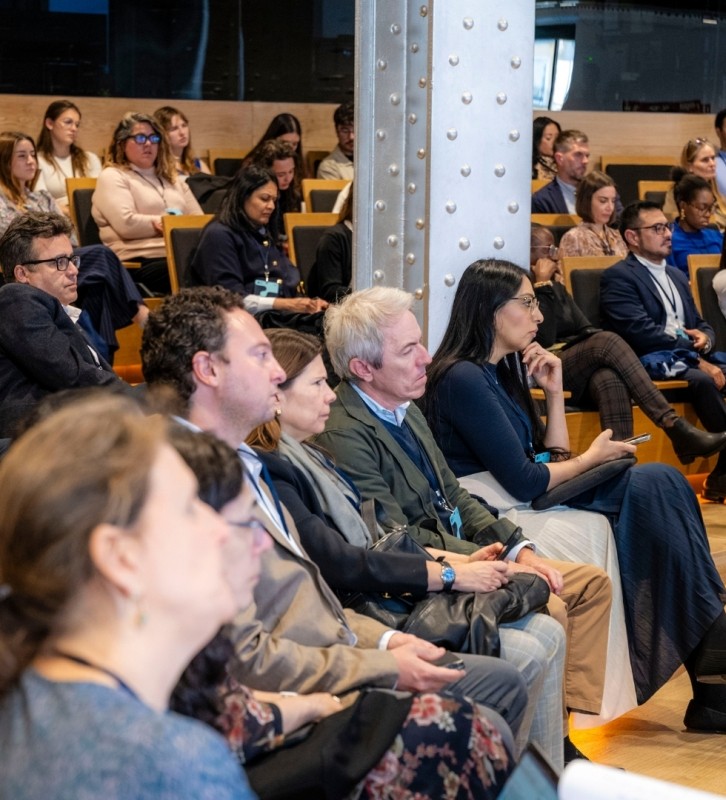
That’s the question I came home with after attending the Global Obesity Forum in Madrid on Monday 26 October on behalf of ASO. The Forum was hosted by the World Obesity Federation and held alongside the WHO-led Global Obesity Summit.
The Forum brought together researchers, healthcare professionals, civil society organisations, youth advocates and people with lived experience from around the world. The focus was on what comes next: how we translate years of research, policy recommendations and commitments into measurable progress by 2030.
Several discussions raised questions that have stayed with me, particularly around the gap between recognising what needs to change and actually delivering it.
Why does obesity policy keep returning to personal responsibility?
Dr Bruno Halpern, President of the World Obesity Federation, raised a contradiction that will sound familiar to anyone working in this field.
We talk about obesity as a chronic disease. We recognise the influence of food environments, economic circumstances and the wider conditions in which people live. We know it’s far more complicated than individual choices about food and physical activity.
And yet when it comes to deciding what to actually do, we somehow land back at telling people to eat better and make healthier choices.
Halpern went a step further, pointing out how policies that could make a real difference are often dismissed as too radical. The result is a familiar cycle: acknowledging the complexity of obesity while continuing to rely on approaches that place much of the responsibility on individuals.
Halpern also reflected on why obesity hasn’t attracted the same political urgency as other major health challenges. Unlike a pandemic, its impact builds over time, making it easier for governments to overlook. Political cycles favour short-term priorities, while meaningful progress on obesity requires sustained action over many years.
And then there’s stigma. As long as obesity is seen as a personal failure, it’s easier to leave responsibility with individuals than to tackle the wider factors shaping their health.
Prevention and treatment are not competing priorities

The growing attention surrounding GLP-1 medicines has brought obesity treatment firmly into the public conversation. Halpern suggested that this interest could also provide an opportunity to broaden the discussion, rather than allowing prevention and the wider determinants of health to be overlooked.
At the same time, prevention alone cannot meet the needs of people already living with obesity who need appropriate care now.
Halpern acknowledged that clinicians and public health professionals do not always approach obesity in the same way. Their priorities and areas of expertise may differ, but an effective response needs both perspectives.
Professor Francesco Branca, former WHO Director of Nutrition and Food Safety, also highlighted the gaps in how health systems identify people who need obesity care and organise services to provide it. Recognising obesity as a disease must be accompanied by accessible, coordinated care for those who need it.
Prevention and treatment should not be viewed as competing priorities. Both are essential to a comprehensive approach to obesity.
What does this look like in practice?
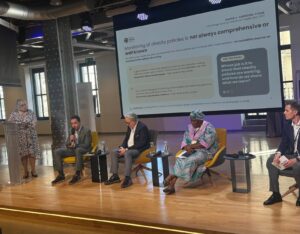
The international perspectives were particularly valuable, showing how approaches to obesity are shaped by different policy environments, health systems and social circumstances.
Spain was a good example of what can happen when research and advocacy come together. Dr Santiago Gómez Santos from the Gasol Foundation talked about its PASOS research, which looks at the health and lifestyles of children aged 8 to 16 across Spain. The findings helped make the case for government action and fed into Spain’s National Strategic Plan to Reduce Childhood Obesity in 2022. The plan includes around 200 measures running to 2030 and now involves 18 government ministries.
That is a significant level of cross-government commitment. Yet, as Gómez Santos explained, agreeing a strategy is only the beginning. The challenge now is implementation, with schools, community organisations and civil society playing an important role in translating national commitments into action locally.
South Africa and Zambia brought a different dimension.
Salih Hendricks, a lived-experience advocate from South Africa, talked about cultural attitudes to body weight, fragmented health services, and policies that don’t always reflect the lives of the people they’re meant to help.
One observation particularly resonated with me. People are frequently encouraged to eat better or exercise more, without sufficient consideration of whether they have the resources, opportunities or support to do so.
Brenda Chitindi, a lived-experience advocate from Zambia, raised concerns about the marketing of unhealthy food products to children, including around schools, and the influence this has on the environments in which children grow up.
These contributions reinforced the importance of developing policies that reflect people’s lived realities, rather than assuming the same approaches will work in every setting.
Meaningful engagement with people living with obesity must also go beyond representation. Their experiences should help shape policy priorities, inform how services are delivered and contribute to assessing whether interventions are making a difference.
What happens after the commitments are made?
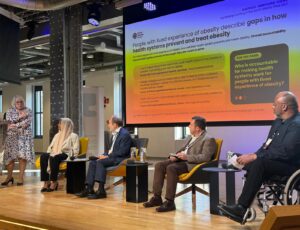
This is the question that stayed with me most.
Halpern made the point that you can’t judge a Forum or a Summit on the day it ends. The real test comes a year or two later. Have governments done what they promised? Are policies actually being implemented? Have things got better for people living with obesity?
The World Obesity Federation has since shared recommendations from the Forum’s breakout discussions with governments at the Summit, covering everything from healthier food environments to improving access to obesity care. These provide a useful starting point, but the challenge will be ensuring they inform decisions and lead to measurable progress.
That raises some important questions. Who is responsible for delivering each commitment? What indicators should be used to assess progress? And how do we ensure that the people affected by these decisions have a meaningful role in holding decision-makers accountable?
With the 2027 UN High-Level Meeting on Universal Health Coverage approaching, there is an opportunity to ensure future commitments are accompanied by clear responsibilities, measurable targets and mechanisms for monitoring progress.
International forums provide valuable opportunities to exchange evidence, challenge assumptions and build consensus. But maintaining momentum once the discussions have ended is a different challenge altogether.
That is particularly relevant here in the UK. The Health and Social Care Committee has now published three reports on food and weight management, calling for stronger action on the food environment, improved access to obesity treatment and clearer political leadership. Its final report calls for a credible cross-government plan, supported by measurable targets and milestones.
ASO contributed written evidence to the inquiry, and Dr Claudia Coelho gave oral evidence on our behalf. Our involvement reflects the important role scientific and professional organisations can play in informing parliamentary scrutiny and ensuring that recommendations are grounded in evidence.
The question now is how those recommendations translate into policy and practice. That includes making progress on healthier food reporting and targets, assessing the effectiveness of advertising restrictions, and addressing inequalities in access to NHS weight-management services. Crucially, it also means establishing how progress will be monitored, evaluated and reported.
For ASO, the discussions in Madrid reinforced the importance of connecting scientific evidence with policy, bringing together expertise from across the obesity community and maintaining scrutiny of what happens after commitments are made.
There is no shortage of evidence, strategies or recommendations. What matters now is ensuring they lead to change.
Perhaps we should spend as much time examining what has happened since the last commitment as we do discussing the next one.
The wider Madrid Global Obesity Summit was due to finish on Wednesday 28 October. Following a fatal train collision near Toledo, south of Madrid, WHO and the Spanish Government postponed that day’s high-level session, including the planned launch of the Global Call for Action. Our thoughts are with everyone affected, and especially those who lost loved ones.